

long handled bath brush designs in 2024–2025 are finally addressing the daily struggles seniors face during bathing: limited mobility, joint pain, and the need for true independence. If you or a loved one is finding regular hygiene hard, this market guide uncovers the latest, most ergonomic options—plus real buyer pitfalls and what actually works when you need safe, hassle-free bathing.
Key Takeaways
- The demand for ergonomic long handled bath brushes has surged as 1 in 6 people will be over 60 by 2030.
- Top user complaints stem from slippery handles, abrasive bristles, and lengths that still aren’t long enough.
- Buyers need to look beyond marketing claims—lab-tested durability, grip safety, and antimicrobial features matter most.
- Why Seniors Need Long Handled Bath Brushes (and What Goes Wrong Without Them)
- The 2024–2025 Market Boom for Ergonomic Bathing Tools
- Biggest User Frustrations: What Seniors & Caregivers Complain About Most
- What Typical Buyer Guides Miss—And Why It Matters
- How to Truly Choose the Best Long Handle Bath Brush in 2025
- Frequently Asked Questions
Why Seniors Need Long Handled Bath Brushes (and What Goes Wrong Without Them)
As mobility, reach, and dexterity diminish with age, keeping up with bathing can feel like a losing battle. Reaching the middle or lower back is difficult for seniors with arthritis, chronic back pain, or recovering from surgery—even for those with only mild mobility loss. Without the right bathing tools, hygiene declines, and the risk of slips, skin irritation, and even infection rises sharply. Conventional bath brushes and standard bath mitt elderly products simply fail to provide safe reach or leverage for those with sore wrists or weak grip strength. Pricey electric options often slide around or break after light use.
By 2030, 1 in 6 people worldwide will be 60 years or older, fueling growth in ergonomic, accessibility-focused bath accessories that let seniors maintain personal hygiene with confidence. (Datahorizzon/WHO)

The 2024–2025 Market Boom for Ergonomic Bathing Tools
The numbers are clear—demand is exploding. The global bath brush market reached approximately $2.8 billion in 2024, while the broader “long handle cleaning tools” segment (including back scrubber long handle and extended reach bath sponge products) will generate $7.7 billion in 2025. Bathroom usage holds over 23% of this market, with 5 to 5.5% annual growth projected through the next decade. (GMI Research)
What’s behind this trend? Seniors want to preserve independence. Many caregivers and adult children now install bathing aids proactively, not just after a fall or injury. Synthetic bristles, antimicrobial features, and extra-long handles are the fastest-rising innovations. Meanwhile, e-commerce and review culture ensure obscure complaints (like poor durability or slippery handles) spark rapid design improvements.
For a deeper dive on overall bathroom safety upgrades, see our full guide on grab bars for seniors—which pair perfectly with long handled brushes for a complete solution.
Biggest User Frustrations: What Seniors & Caregivers Complain About Most
Reviews from seniors and caregivers surface the same recurring flaws in popular “elderly” bath brushes:
- Slippery or thin handles: Handles may be easy to grip when dry but become slick and treacherous when wet. Slim shafts cramp arthritic fingers.
- Abrasive bristles: Stiff nylon or boar bristles can irritate sensitive, thinning, or easily bruised skin, causing more harm than good.
- Weak handles: Hollow or plastic handles snap, bend, or pop out at the joint after just a few weeks of use—especially when used as a back scrubber long handle on higher-BMI users.
- Still too short: Even extra-long brushes sometimes fall just short of full back or feet coverage, forcing users to twist dangerously. Some extended reach bath sponge options flatten under pressure and offer no scrubbing power.
Top complaints in thousands of Amazon reviews: slick handles when wet, abrasive bristles for sensitive skin, handles that break quickly, and overall, lengths that still don’t offer full access. (Amazon Research)
Supplement your bath routine with a non-slip bath mat—so even if your brush slips, your feet won’t!
What Typical Buyer Guides Miss—And Why It Matters
Most roundups simply rank brushes by price and Amazon star ratings. But seniors and caregivers deserve more than that. Critical info missing in generic guides includes:
- Real durability proof (lab tested lifespan under wet-use cycles)—not just claimed “high quality.” Many brushes last fewer than 50 cycles before bending or fraying.
- Scientific grip metrics—objective slip resistance and force-to-hold data. Results vary dramatically depending on the handle’s contour, texture, and diameter.
- Safety and antimicrobial validation: Mold-resistance is crucial; only a few brushes display documented antimicrobial coatings or formal safety/skin certifications (for instance, brushes carrying EPA Safer Choice badges after recent guidelines expansion). (Technavio, 2024 EPA Update)
This technical gap is as risky as improper grab bar installation—see our guide on ADA-compliant bathroom grab bars for what certified safety really means.
How to Truly Choose the Best Long Handle Bath Brush in 2025
Ready to shop? Here’s a field-tested checklist for picking a long handled bath brush that won’t disappoint—or put a loved one at risk:
- Pick handle material and grip type: Go for textured, rubberized, or silicone slip-on grips at least 1.1 inches wide. Wood is beautiful but can become slippery and degrade faster.
- Check bristle softness: Choose gentle synthetic or microfiber bristles—avoid harsh boar bristles or cheap plastic. Try the brush on the soft part of your inner arm.
- Verify handle length: For full back access (without twisting), handles should be 16–20 inches minimum. For large body types or limited shoulder mobility, seek “jumbo” or “XL” (25–28 inch) designs.
- Insist on mold/safety certifications: Look for products with clear antimicrobial badges or references to EPA Safer Choice. When shopping for a tub cleaning brush long handle, avoid brushes that don’t mention lab-tested coatings or user-safe bristle materials.
- Durability and return guarantee: Synthetic bath brushes now hold 28.5% of the market (2025), driven by excellent lifespan and mold resistance. Only buy if there’s a no-questions-asked return policy—flimsy designs often fail in weeks. (DataIntelo)
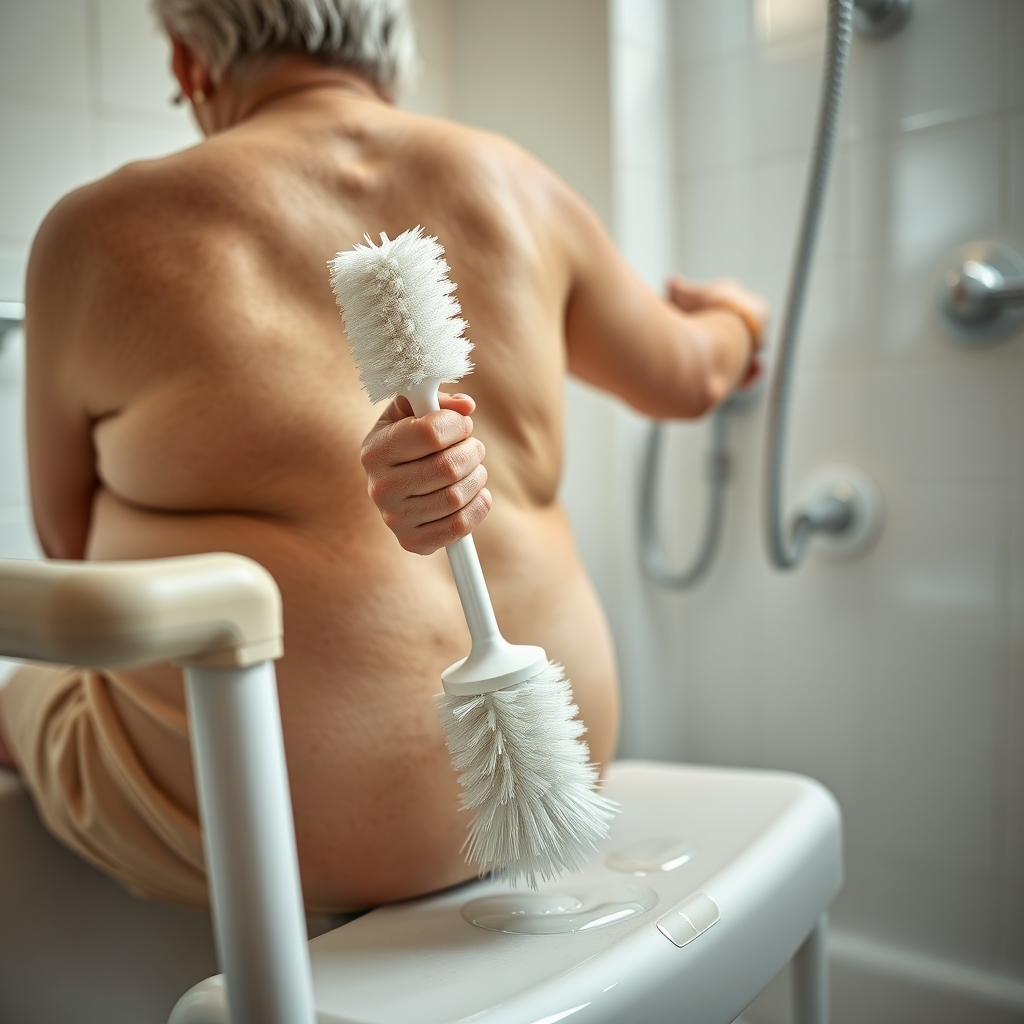
Pair with a toilet safety rail for seniors to keep the bathroom both clean and fall resistant.
Still unsure? Check our step-by-step guides for safe shower chair selection
and bath cushion strategies too.
Advanced Analysis & Common Pitfalls
Not every “senior bath brush” delivers on its promises. Let’s break down real pitfalls and compare feature sets on offer in 2024–2025.
| Feature | Typical Brushes | Best 2024–2025 Ergonomic Brushes |
|---|---|---|
| Handle Slip Resistance | Glossy plastic/wood, thin (0.8–1.0 in), few grip zones | Rubberized/silicone wraps, 1.2–1.5 in, finger contour grips |
| Bristle Type | Stiff nylon or boar, “one size fits all” | Flexible synthetic, replaceable heads, skin-safe tested |
| Handle Durability | Hollow, often glue-jointed, breaks under moderate force | Solid shaft, fatigue/lab tested, reinforced at stress points |
| Length Options | 12–16 in, often too short for back | 16–28 in, adjustable or fixed “jumbo” variants |
| Mold/Safety Certifications | None or “antimicrobial” as a buzzword | EPA Safer Choice, allergen/skin-friendly, clear marking |
| Return Policy | 7- to 30-day, sometimes none if opened/used | 60-day unconditional, free return labels |
One persistent issue: Many “bath mitt elderly” and “loofah long handle” products offer no user safety data or durability guarantee, despite claims of “senior-friendly” status.
Want to further minimize falls? Consider solutions from our guides on bathtub mats for seniors and even oversized non-slip mats.

Conclusion
The most ergonomic long handled bath brush options of 2024–2025 combine lab-tested durability, real slip-resistant handles, and medical-grade bristles to make hygiene possible (and dignified) for seniors. Don’t trust hype alone—read lab reports, check certifications, and demand a no-questions return policy. Your safety and independence are worth it.
Ready to take control of your comfort and safety in the bathroom? Start by choosing an ergonomic long handled bath brush built for real-world use—not just a marketing tagline.
Frequently Asked Questions
What is the ideal handle length for seniors or users with limited mobility?
For most, a 16–20 inch handle suffices to clean the entire back and feet without twisting. For severe mobility limits or larger builds, look for 25–28 inch “jumbo” models.
How can I make a bath brush grip less slippery for arthritis or weak hands?
Add a silicone slip-on grip or a foam tube (like a cut tennis ball) to widen and soften the handle. This makes even economy brushes safer for bath mitt elderly applications.
How do I know if a brush is truly antimicrobial or lab-tested?
Look for EPA Safer Choice or ISO skin-safe logos, and review the product description or manufacturer’s site for independent lab test details. Avoid brushes with vague “antimicrobial” claims but no proof.
How should I clean or disinfect my long handled bath brush?
Rinse after each use. Once a week, soak bristles in diluted white vinegar or mild soap solution. Let air dry thoroughly. Replace if the bristles are matted, discolored, or smell musty—even “mold-proof” models can fail over time.
Are medical-grade bathing aid seniors brushes covered by Medicare?
Generally, these are considered “personal care aids” and not covered. However, some home modification grants or rehabilitation plans include them as part of safe bathing equipment bundles.