

pill dispenser elderly solutions are transforming how families keep seniors safe and independent—especially in the bathroom, where most medication mistakes and accessibility issues strike hardest. If you’ve struggled with confusing routines, awkward pill trays, or unreliable alarms, this new 2024 guide offers a realistic path to safer, hassle-free medication management for older adults in real-world bathroom settings.
Key Takeaways
- Modern pill dispensers for the elderly now target real-world bathroom safety and error reduction—yet key features for the bathroom are still often missing.
- Buying the right dispenser means comparing cost, true accessibility, alarm customizations, and ease of refill, not just tech specs and app controls.
- Alarm fatigue, small compartments, clumsy refilling, and lack of bathroom adaption remain top pain points—advanced options are coming, but pitfalls persist.
- Why Medication Management Needs to Change in 2024
- Pill Dispenser Elderly – Features for Independent & Safe Bathroom Use
- Cost, Pricing Tiers & What You Really Get (2024–2025)
- Gaps & Pain Points: What Users Wish Pill Dispensers Fixed
- Choosing the Best Medication Organizer for the Bathroom: Checklist
- The Future: What’s Next for Safe, Bathroom-Friendly Pill Dispensers?
- FAQ: Pill Dispenser Elderly
Why Medication Management Needs to Change in 2024
Medication routines are more complex than ever for seniors, with most juggling five or more daily pills—often in the bathroom, where wet hands, poor lighting, and slippery surfaces add to the risk of confusion or dropped doses. Manual pillboxes and alarms simply don’t cut it anymore for this context, driving a shift toward smarter pill dispenser elderly devices and bathroom safety accessories that address safety, memory, and independence.
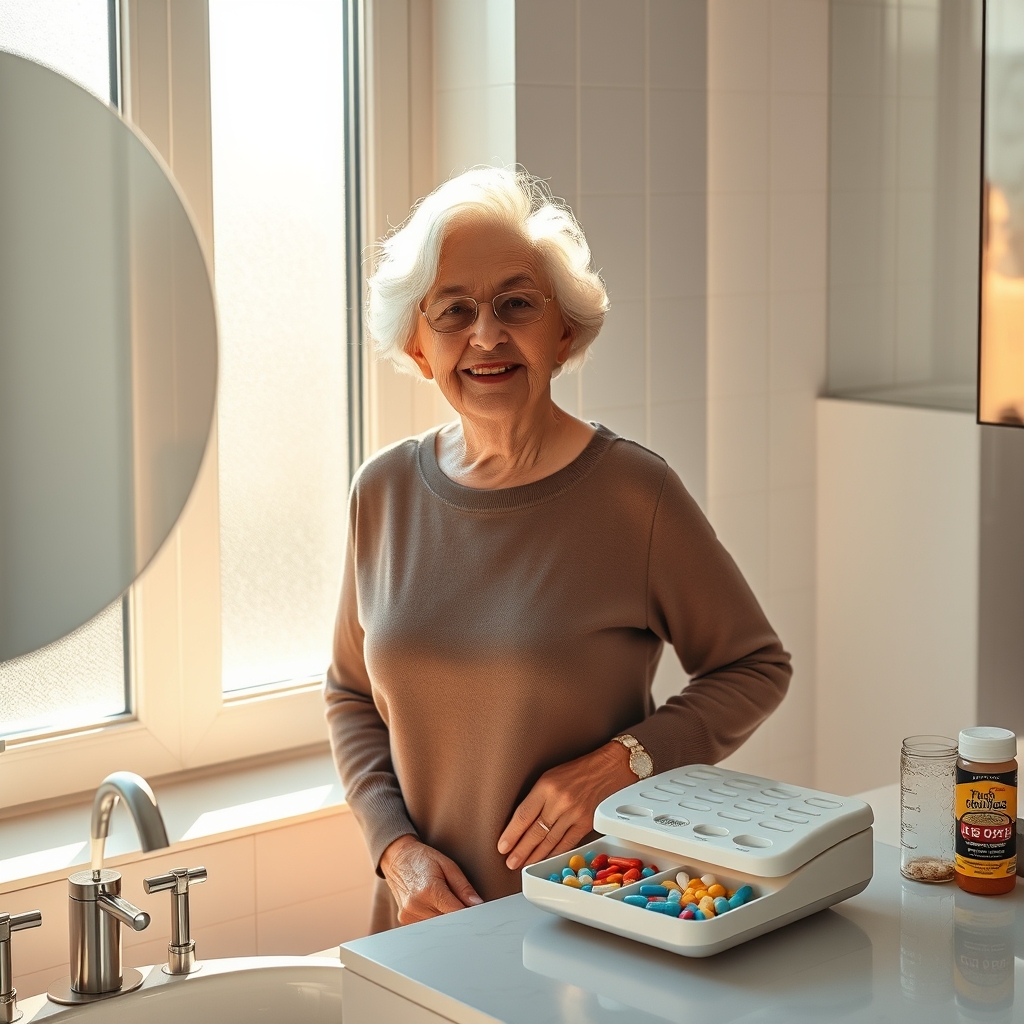
The stakes are high. According to industry research, the global automatic pill-dispenser market hit USD 3.2 billion in 2024 and is projected to nearly double by 2030, as safety and adherence take center stage. About 40% of seniors over 65 experience memory issues—often normal aging, not dementia—yet still enough to risk missing or doubling up on doses. This is stressful and dangerous, especially with medications where the line between “therapeutic” and “toxic” is thin.
Bathroom environments bring a unique set of challenges. Many solutions aren’t actually designed for wet or crowded spaces or for seniors with arthritis, limited dexterity, or vision issues. That means a new kind of device—practical, easy to access, and error-proof, even on a foggy mirror kind of morning—is needed now more than ever.
Pill Dispenser Elderly – Features for Independent & Safe Bathroom Use
Choosing a modern pill dispenser means looking beyond generic sales pitches and focusing on features that solve real bathroom problems: wet hands, confusion, and interruptions during daily routines. Here’s how to break down what actually matters—and what’s too often missing—in today’s pill dispenser elderly options.
- Easy Access & Visibility: Look for wide, easy-open lids or push-button access. Seniors with arthritis or neuropathy need smooth mechanics—tight snaps are a guaranteed frustration, especially when hands are wet.
- Large Compartments: Compartments must hold large or odd-shaped pills. Too many standard units force pills to be halved or “crammed,” leading to stuck doses or confusing errors.
- Alarm Customizations: Must allow distinct, adjustable alarm styles (volume, length, snooze). Remote controls or app-based silencing are useful if physical access is tough during bathing.
- Voice Guidance & Error Alerts: Audible spoken prompts help those with declining vision or memory. Devices like Hero or MedaCube use smartphone alerts—but hands-free bathroom use is limited unless the base is splashproof and reachable.
- Refilling & Error-Proofing: Ability to add pills without disassembling the whole device, and built-in checks (like ensuring no double dosing or missed days), are vital for routine accuracy.
- Bathroom Adaptation: Devices rarely consider power outlets, limited counter space, or moisture. Look for models designed to resist steam and provide stable, non-slip bases or wall-mount options.
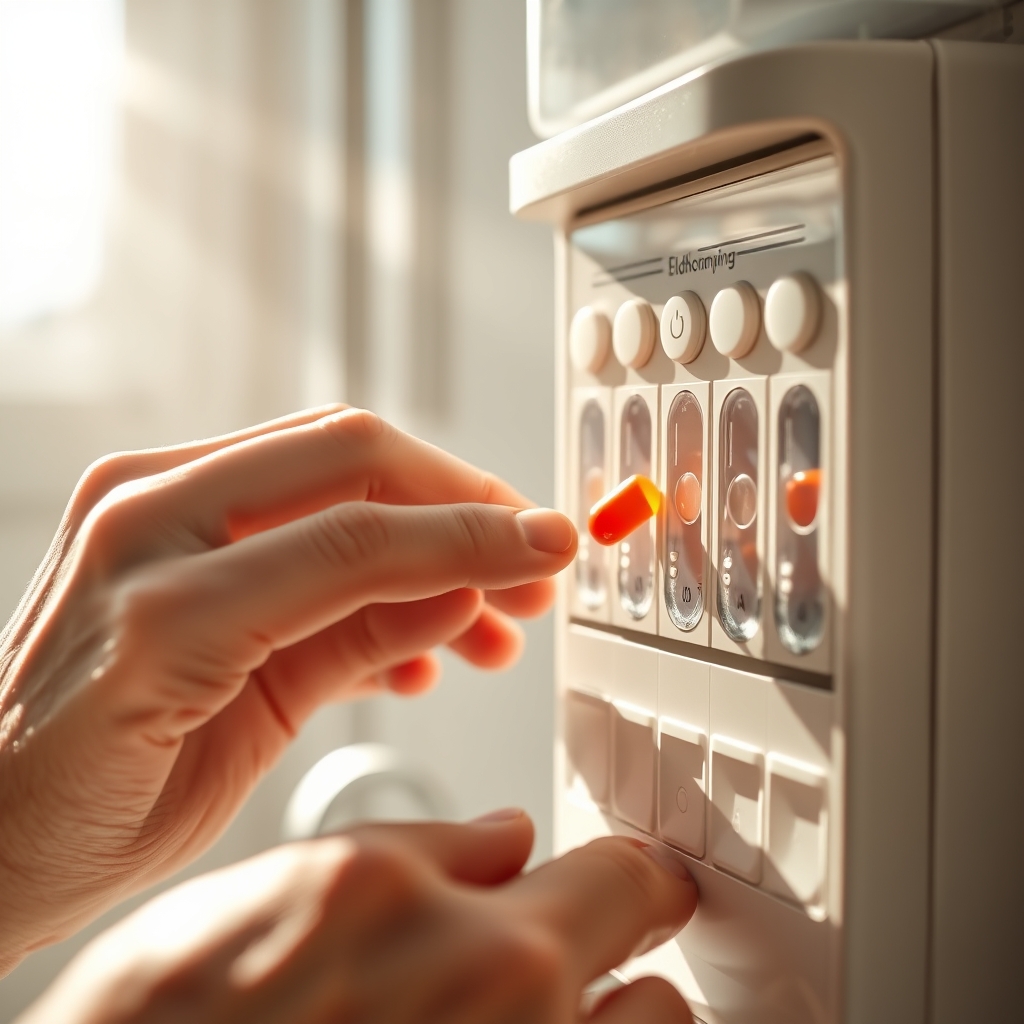
Even leading brands aren’t nailing everything. For example, Hero and MedaCube have loud alarms, high pill capacity, and mobile alerts—but few include hands-free refilling, bathroom-adapted construction, or AI-driven error detection. These gaps are what users most frequently complain about.
If you’re setting up a safe bathroom for a loved one, supplement your dispenser with grab bars for stability or fall detection devices for extra security.
Cost, Pricing Tiers & What You Really Get (2024–2025)
Pill dispenser elderly prices range more than most buyers expect—and not every device suits bathroom needs. It’s easy to pay for features you’ll never use or miss critical capabilities you assumed came standard.
| Brand | Pill Capacity | Compartment Size | Alarm Types | Bathroom Usability | Price | Subscription | Battery Life |
|---|---|---|---|---|---|---|---|
| Hero | Up to 10 meds (90 days) | Medium (avg 30 pills) | Audible / Visual / App | Wall outlet required; not splashproof | $99 setup | $29.99–$44.99/mo | 2–4 weeks |
| Mobi | Up to 35 pills x 28 days | Large (35+ pills/compartment) | Loud alarm, flashing light | Battery option; compact, no app | $149–$159 | No | Up to 4 weeks |
| MedaCube | Up to 16 meds (90 days) | Large (multiple pills) | Audible, visual, custom voice | Large footprint; countertop only | $1,999 | No | 2–4 weeks |
| LiveFine | Up to 9 meds (28 day cycle) | Small to medium | Alarm, flashing light | Portable; AA batteries | $89.99 | No | Weeks/months (AA) |
Entry options like Mobi cost $149–$159 up front with large, easy-to-use compartments, while premium choices such as MedaCube run up to $1,999. Subscription-based models like Hero feel affordable initially, but monthly fees add up. Alarms, notification types, and true senior bathroom product compatibility differ widely. Battery life averages 2–4 weeks—remember, frequent charging or poor plug placement can be a critical discomfort in compact bathrooms (see comparison).
Always check: will the device fit near the sink or tub? Does it resist humidity? Can it be refilled easily, without spilling, even if you’re balancing on a shower bench or have only one hand free? These daily realities matter far more than app integrations or “bonus” tech features.
To see how bathroom safety equipment fits into an overall plan, check resources on large non-slip bath mats and toilet safety rails—these dramatically cut fall risk during medicine routines.
Gaps & Pain Points: What Users Wish Pill Dispensers Fixed
Despite rapid tech growth, the most common complaints about medication organizer bathroom tools and so-called independent bathing aids haven’t radically changed:
- Alarm Fatigue: Multiple alarms per day, indistinct beeping, or alarms that cannot be set to preferred times create “tune out” syndrome—users ignore the device, or worse, turn it off during showers or toilet trips and forget to reactivate.
- Physical Inaccessibility: Dispensers that require two hands, strong grip, or precise alignment are hard to open for many with arthritis or tremors—especially standing up from the toilet or bending at awkward angles.
- Small Compartments: Even “smart” devices may only fit 12–20 regular sized pills per compartment, nowhere near enough for large supplements or jumbo multivitamins. Daily refilling defeats the point for many family caregivers.
- Manual Refill Hassles: Most products demand time-consuming, error-prone manual loading. Few offer bulk loading or true hands-free refills—this is especially frustrating for visually impaired users or those managing regimens during quick bathroom visits.
- Lack of Bathroom Adaptiveness: Few dispensers are designed to shield electronics from steam, splashes, or the dense humidity of regular bathroom use. Power cords in hazardous spots and non-slip bases are seldom standard.
- Limited Remote or AI Features: Many top brands still lack bathroom-ready remote dispensing, adaptive multi-modal alarms, or proactive reminders suited for users with declining short-term memory.
One real-world workaround: set up your dispenser alongside a robust non-slip bath mat for seniors to keep both device and user stable—critical for safe medicine management.

Choosing the Best Medication Organizer for the Bathroom: Checklist
Not every medication organizer bathroom model is created equal—especially where wet, cluttered, or compact bathroom settings complicate dosing.
- Compartment Size & Count: Match pill size and number to device. For example, Hero holds up to 10 meds for 90 days, Mobi fits up to 35 pills for 28 days, and MedaCube stores up to 16 meds for 90 days.
- Easy-Grip or One-Hand Access: Look for push-button, flip-top, or slide-out compartments. No twisting motions or pinching.
- Bathroom Placement: Will it fit on a shelf, sit securely, or wall mount? Is it protected against splashes and fog?
- Alarm Flexibility: Offers snooze, multiple volume choices, and voice or app-based alarms tailored to bathroom routines.
- Refill Ease: Can you refill standing, seated, or even with just one hand? Are error alerts visible or vocal if a mistake is made?
- Support & Connectivity: Is there real-time caregiver notification or just flashing lights? Does it sync with remote family or medical staff if doses are missed?
- Price & Power: Does your budget fit subscription or one-time purchase? Is battery life realistic for your usage?
Compare this checklist to your current bathroom kit—adding, for example, a motion sensor night light can boost safety, while ensuring you pick a dispenser that won’t demand daily fiddling for battery swaps or finicky alarms.
The Future: What’s Next for Safe, Bathroom-Friendly Pill Dispensers?
The next generation of bathroom safety accessories will go far beyond louder alarms or app alerts. Research shows that vendors are investing in cost-effective models and smarter, patient-centric design. Expect innovations such as:
- AI-Driven Dose Confirmation: Dispensers verifying if medicine is taken—not just dispensed—using sensors or voice check-ins.
- Voice-Guided, Adaptive Reminders: Gentle, context-aware prompts that adjust to bathroom acoustics and daily patterns, reducing alarm fatigue.
- Hands-Free & Remote Access: Units you can refill or activate without touching, or even allow remote caregiver control if a dose is missed in the bathroom.
- Integrated Bathroom Safety: Products that sync with fall detection, aging-in-place bathroom kits, or accessible shower conversions for a connected safety solution.
- Wider Access with New Pricing Models: Subscription tiers, rental plans, or healthcare bundles are making advanced dispensers more accessible for diverse budgets—especially in fast-growing regions like Asia-Pacific [Research].
As care shifts to the home and telehealth expands, expect safer, smarter, and more adaptable pill dispensing—and realistic solutions for the realities of aging in place.
FAQ: Pill Dispenser Elderly
For seniors and families, the bathroom is the most practical (and risky) place to manage complex pill routines. The right pill dispenser elderly device—matched to real bathroom needs, not just gadget specs—can prevent errors, boost independence, and give peace of mind. Compare models, demand true accessibility, and supplement with proven bathroom safety upgrades to protect those you love.
Ready to fix medication chaos? Review your routine, check the detailed comparison above, and invest in a solution that supports real bathroom safety—not just a new alarm. Your loved ones deserve it.
Are pill dispensers safe to use in the bathroom?
Most automatic pill dispensers are safe in typical bathroom environments, but not all are splashproof or protected against high humidity. Look for models with sealed electronics or wall-mountable options if you plan to keep them near sinks or showers.
How often do pill dispenser batteries need charging?
Battery life averages between 2 and 4 weeks per charge. Frequent charging is needed if the unit uses lights, alarms, and app connectivity. Place chargers in easy-to-reach areas to reduce the risk of forgotten refills.
What’s the best pill dispenser for arthritis or low grip strength?
Seek dispensers with large, push-button lids, minimal twisting or pinching, and compartments that slide or flip open. Mobi and MedaCube score well in this regard. Avoid any product that requires dexterous manipulation or fine motor skills for daily use.
How do I prevent alarm fatigue with seniors?
Choose dispensers with adjustable alarm tones (volume, duration, voice recordings), ideally with different cues for different times of day. Incorporate voice reminders or gentle prompts instead of harsh beep sequences to reduce tune-out risk.
Can pill dispensers connect to caregivers or family apps?
Yes, many smart dispensers like Hero and MedaCube send real-time notifications for missed doses to caregiver apps or via text. Confirm compatibility with your mobile device and ensure WiFi or Bluetooth works in your bathroom location.